So, so far behind, but I remind myself that just because I read these books waaaay back in March doesn’t mean you won’t enjoy reading them now, or next month, or next whenever. . . I’ve decided that for the time being I’m going to duplicate my Reading Posts: I’m publishing them here on the blog (after first sending them out on Substack) so that I can have the entire archive of my book posts in one place. I haven’t yet pulled the plug on the blog’s email subscription service, so I hope those of you who subscribe to both won’t mind an extra monthly missive.
Please be aware that the Substack post has already collected quite a few comments with recommendations for your future reading. I’d love to have you join that conversation.
And now for my March reading. . . .
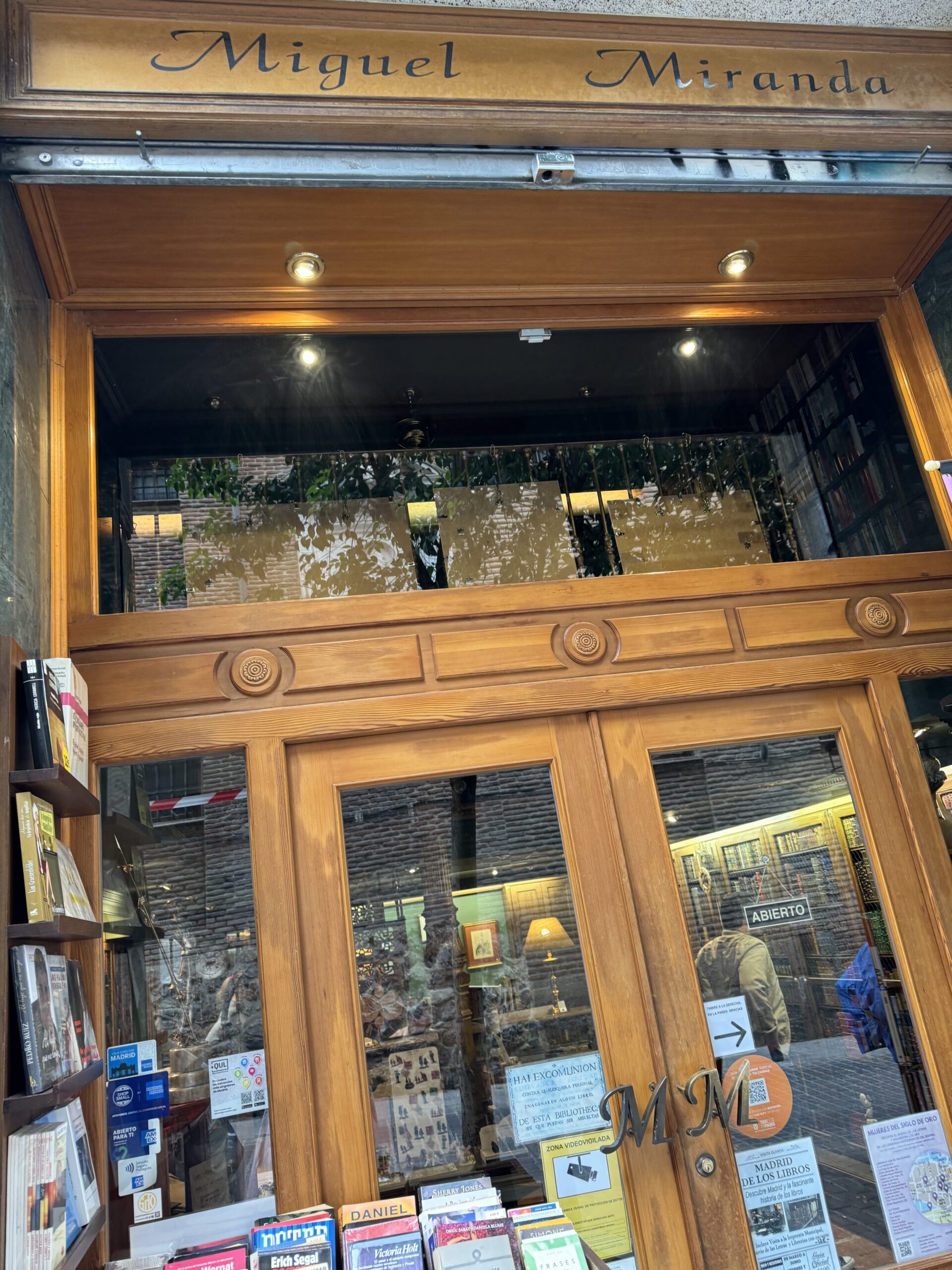
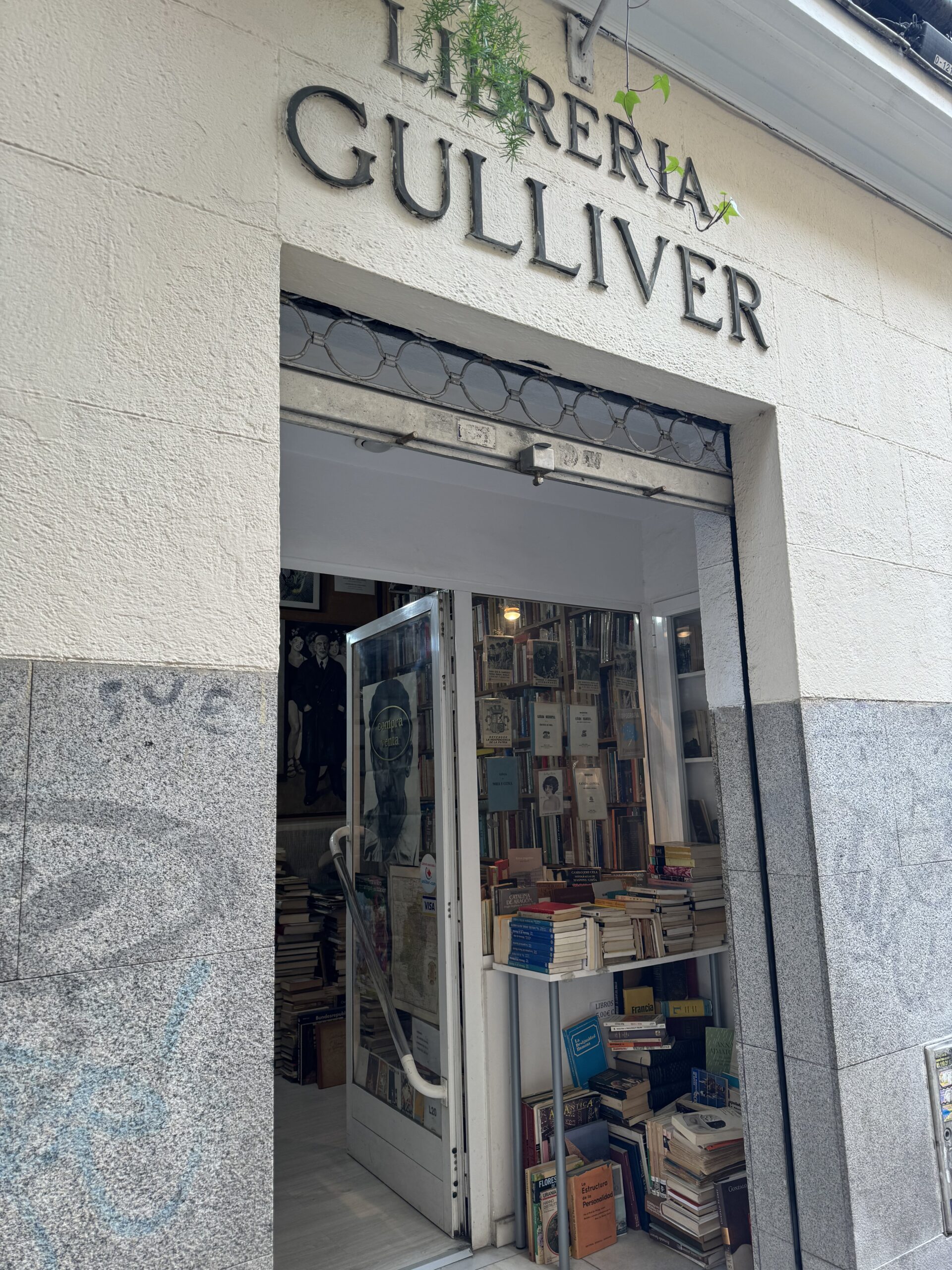
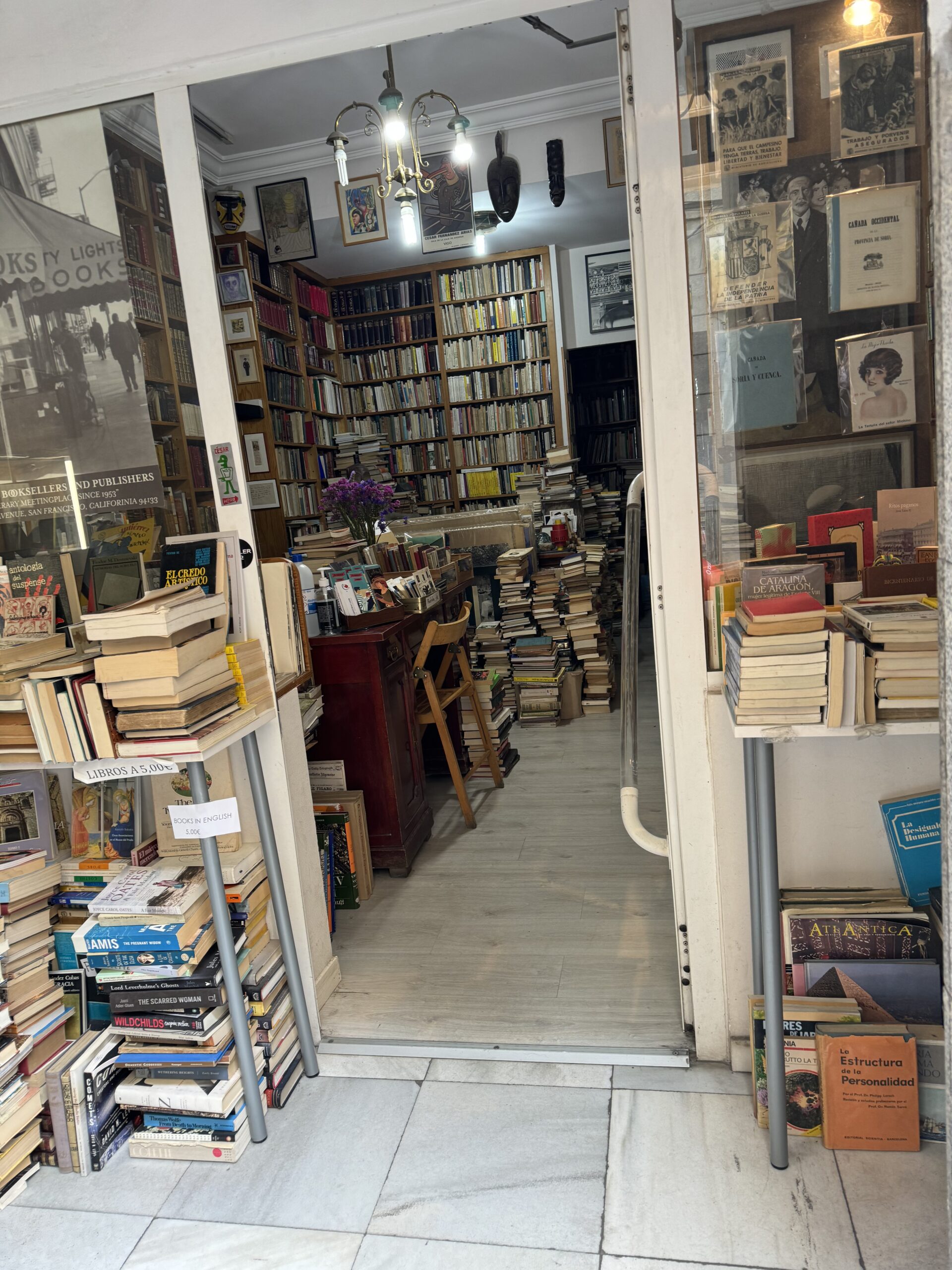
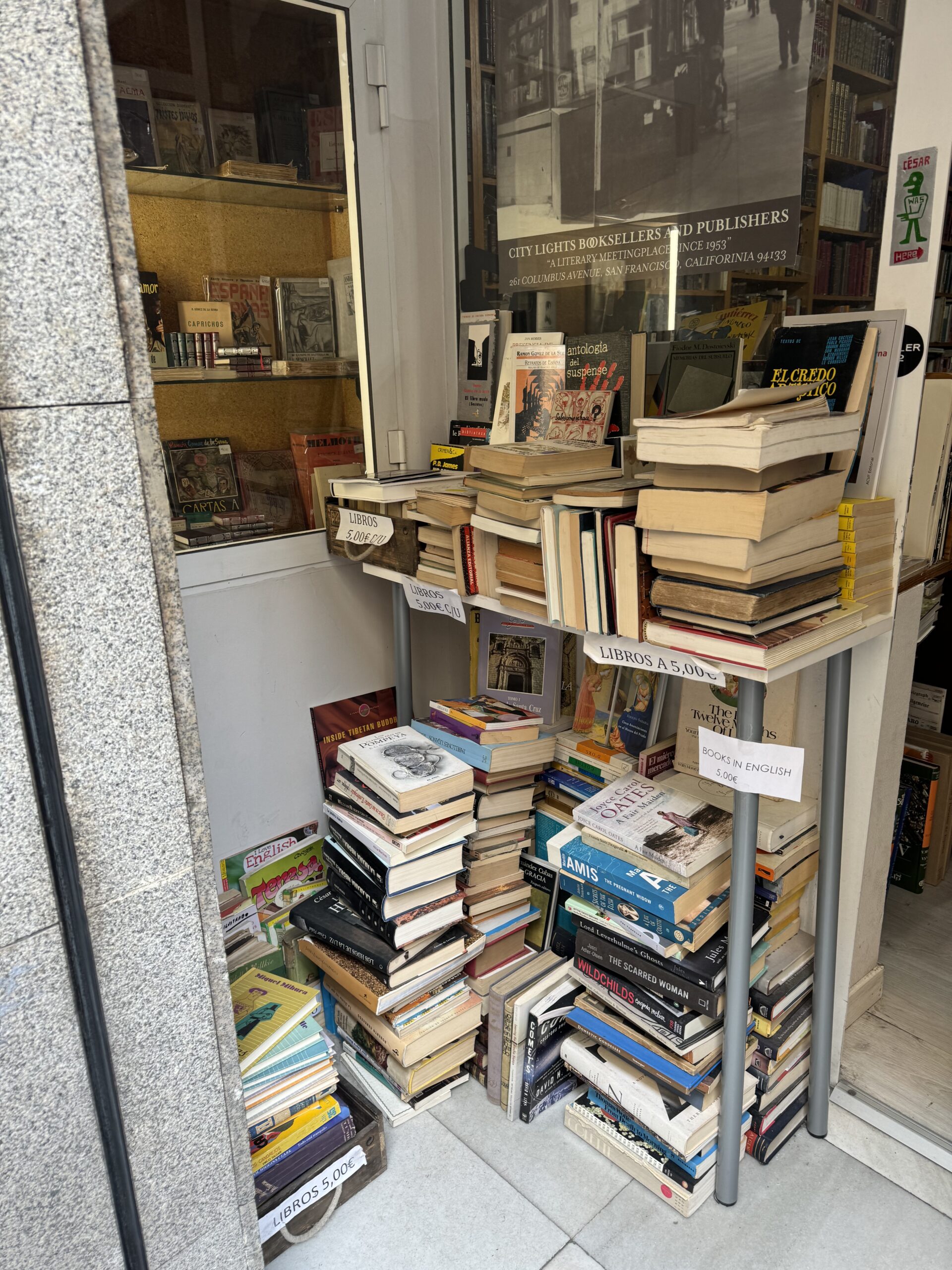
Because I will be in Madrid in less than two weeks (¡Gritos de alegrìa!), illustrations for this post are taken from my visit to that city two years ago. So many wonderful bookstores . . .
As usual, the numbering in this post comes from my annual handwritten reading journal, and the italicized text below is directly transcribed from that journal’s pages (once upon a time, I simply included photographs of those pages, but too many of you found my handwriting tough to decipher, especially in the photographed format). Notes to myself, that is, so that I can remember a book and remember my response to it, rather than any attempt at a more polished, edited review.
I’ve used regular font for any additions to my journal notes. As well, I’ve included links to any posts on my Instagram reading account (to which, by the way, I’m trying to post a bit more regularly — but also considering abandoning. We’ll see. . . )
16. Elderhood: Redefining Aging, Transforming Medicine, Reimagining Life. Louise Aronson. Non-fiction; Memoir; Medicine/Geriatrics/Gerontology; Cultural History of Aging.
Louise Aronson’s book mixes memoir with a history and a critique of the way society in general — and the medical profession in particular — has treated aging. Aronson came to medicine from a humanities background, and she then switched gradually from work as a general/family practitioner to specialize in geriatrics. Along the way, she suffered severe burnout at several points as a result of the incalcitrant demands on her time of an increasingly bureaucratized and automated system that, she argues, ignores the importance of individual narratives.
One of her central arguments is that elderhood deserves to be studied and understood as a distinct life stage with its own physical conditions that must be considered when prescribing medication or recommending surgery — just as we treat childhood, adolescence, and adulthood as separate stages.
And she argues for a more compassionate vision of the elderly, since, if we’re lucky, many of us will inevitably become so. Yes, there are drawbacks, challenges, and frailties, but Aronson points out the strengths and values of this last stage of life. She suggests that cultivating this compassionate vision earlier in life will help us to look at our elderly selves with more kindness, more optimism, and more conviction in our own abilities and continued worth.
I borrowed a copy from my library, but I think it would be worth picking up my own copy. I’d put it on my bookshelf right next to Atul Gawande’s Being Mortal (briefly discussed in this post from over a decade ago)
17. The Water-Bearers. Sasha Bonet. Memoir; Mothers and Daughters; Black history; American history; Cultural History of Slavery and Repercussions.
This one is powerful, both as a personal memoir and as an imaginative (and research-based) cultural history that indicts American colonial history — and especially the horrifying history of slavery — for the difficult relationships of black daughters and sons (although Bonet is primarily focused on the mother-daughter relationship) with their mothers.
The intergenerational trauma rooted in an economic-politicial situation which allowed — no! forced! — a mother‘s children to be taken from her and sold at any point. Thus Black enslaved women wanting the best possible futures for their children had to raise those children (for as long as they had contact with them) to survive. And for girls, particularly, that meant learning how to guard and guide their sexuality. And those mothers also had to maintain some emotional distance so they might themselves survive inevitable loss.
Bonet unspools her own family history through her maternal lineage, beginning with her mother’s mother, a powerful force. She raised her many children on her own, with little interest in their fathers. Fiercely strict about their behaviour, she cared for their physical needs but was much more demonstrative in her affection as a grandmother than she was as a mother.
So that Bonet’s own mother doesn’t know how to show warmth or love to her own daughter, but instead focuses her energy on working hard to break through social barriers of gender, class, and race, so that she can provide her children with what she considers signs of “success.”
When Bonet has her own daughter, she’s determined to understand — and break! — a pattern forged in such inter-generational trauma. Illuminating and moving and, I’d say, important. A memoir that shows us yet again that the personal is the political and the historical.
18. Guilty by Definition. Susie Dent. Mystery; Lexicography; Literary Mystery; Oxford.
A clever and entertaining mystery written by an English lexicographer and etymologist and set in a fictional corner of her world.
A team of lexicographers working at the Clarendon English Dictionary receives an anonymous letter which sets out a puzzle to be unravelled for clues. These clues and those that arrive in a subsequent series of notes to various recipients imply yet-unrevealed knowledge about the disappearance of a brilliant and beautiful young woman years earlier.
The young woman was the older sister of the lexicographers’ Senior Editor, and the novel deals sensitively and insightfully with her grief as well as with the damage the disappearance wrought on her family.
The mystery plot is well-paced, tense, and convincing; word-lovers will also delight in the wordplay, in the precise use of unusual (even arcane) vocabulary. In fact, puzzle lovers will likely slow down to see if they can work out the clues for themselves (I wasn’t that patient 😉
19. Insomniac City: New York, Oliver, and Me. Bill Hayes. Memoir; Love Story; Gay Relationship; Mixed-Age Couple; Oliver Sacks; New York City.
I’m not sure why I’ve never read any of Oliver Sacks’ books but only know of them and have been fascinated by reviews and others’ accounts of them. Now that I’ve read Bill Hayes’ loving memoir, I want to read my way through Sacks’ work. Almost 30 years older than Hayes, Sacks was closeted most of his life. Before he and Hayes got together– friends first, and then lovers for Sacks’ last six years — he had been celibate for decades.
Through his lover’s eyes (Sacks hated the term “partner, preferred “lover”) Sacks emerges as both ebullient and reserved, brilliant, quirky, delighting in the world and all its fascinating phenomena. And Hayes’ loving and beautifully observant prose reveals Sacks in this lately discovered love, the passion and tenderness and fleshly pleasures they share. Both love New York and Hayes writes eloquently about the city, capturing vignettes in words as well as in the photographs which illustrate the memoir.
I also appreciate the memoir as another representation of couple-dom, queering the idea of marriage in productive ways. The two men kept separate apartments, spending most of their time together but reserving private time and space each to himself as well.
And grief. The memoir begins with Hayes grieving the sudden death of his previous love, Steven, with whom he’d lived for 16 years. And it ends with an account of Sacks’ illness and how he chose to respond to that diagnosis. Yet while the grief is real, so is the joy throughout — and it’s worth noting that the account of Sacks’ last years reads very well as a complement to Susan Aronson’s Elderhood.
20. Baba. Mohamed Maalel. Italian contemporary fiction; Autobiographical fiction; LGBTQ fction; Coming-of-age novel; mixed-culture Italian; immigrant lives.
I read this for the Italian book club I belong to, which for the last few months has been led by a 20-something man raised in Milan by his Italian mother and Egyptian father. New to this role as a book club facilitator, Omar has chosen books that have a theme he can relate to, that is, being caught between cultures and/or being a migrant, refugee, or ex-pat. I’ve relished the introduction to writers I might not otherwise have encountered.
Coming of age — a young boy growing up in Puglia with a Tunisian/Muslim father and an Italian/ Catholic mother. The father loves his son, treats him tenderly when he’s young, but as the young boy, Ahmed, begins displaying behaviour not appropriately “masculine,” he becomes harsh, punitive. As well, he blames his wife for allowing their son to indulge in questionable activities (playing with dolls, dancing with his mother, trying on girls’ dresses). The boy is quickly caught between confusion, guilt, and resentment, with no models to guide his gathering awareness of his difference, his attractions.
The novel is being narrated by Ahmed, as an adult who has moved away from home and gradually learned to accept his homosexuality. He’s returned home to help his mother (long-suffering in an often abusive marriage) care for his father in illness and then to mourn him in death.
The narration slips from adult present to various points in Ahmed’s childhood and adolescence, and is moving, observant, often poignant, sometimes funny, and occasionally quite disturbing. And somehow Ahmed manages to relate the difficult truths about his upbringing while leaving room to acknowledge the love he and his father hold for each other.
Not (yet, at least) available in an English translation, but an excerpt of the book was translated by Clarissa Botsford and published in Asymptote Journal. (Warning: this excerpt contains a centrally important but disturbing description of a childhood circumcision in Tunisia. It’s also a nuanced and complex passage, rich in its integration of two cultures, but it is tough to read.).
In his Instagram account, Maalel describes himself as metà orechietta, metà couscous (half orechietta, i.e. the Puglian pasta shaped like little ears; half couscous) as well as a “giornalista foodie” for Rolling Stone magazine, and a divoratore di focacce (a devourer of foccaccia). Knowing this, it won’t surprise you that the novel contains wonderful descriptions of food, its preparation, and its role in binding and nurturing community, both in Italy and in Tunisia.
21. The Rising Tide. Ann Cleeves. Mystery; Police Procedural; Vera Stanhope series.
10th in the Vera Stanhope series. A group of friends have gathered every five years on Holy Island where they first spent a retreat weekend in their late teens. On the first night of this 50-year reunion, a celebrity member of the group is found hanged — and despite the initial appearance, Vera establishes that he’s been murdered. Secrets begin to be revealed . . . and yes, a tide rising over the paved causeway to Lindisfarne, the Holy Island, threatens . . .
Recommended, but I also recommend that you read the series from the beginning, in sequence, to watch the development of the various characters, particularly in that of Vera Stanhope.
22. Flesh. David Szalay. Literary fiction; Contemporary realism; Psychological fiction; Coming of Age; Masculinity; Booker Prize, 2025.
I resisted this for some time because irritated by the numerous reviewers trumpeting that male fiction writers are back. Hmmmph! But I ended up reading it because that Dottoressa is always discerning and doesn’t steer me wrong. (Here’s what she said about the novel, back in February when she commented on my Books Read in January post:
Szalay is a Hungarian-British author. His main character István is a Hungarian who came to London and ends eventually in Hungary. To quote Roddy Doyle: ” a dark book but it is a joy to read”. István doesn’t talk much,his sentences are very sparse and simple,and it seems that things simply happen to him, he seems like a passive participant,from the affair (actually an act of grooming) with his neighbour, murder, PTSP and depression after the army,than rags-to-riches life in high society in London….Such an extraordinary, excellent novel.
And she’s right, of course! I found it beautifully written if very spare, both compelling and uncanny in the distance it creates between the action recounted and the apparent passivity protagonist Istvan displays throughout. Love, parenthood, wealth, huge loss, tragedy, all seem to happen almost accidentally, almost as reflexive physical responses to the world. Will he ever make a conscious clear choice on which he acts? (Spoiler: Yes! almost at the end of the novel, to save someone’s life. . .)
We’re enjoying the most marvellous Spring weather here in Vancouver these last few days, and it looks as if it will continue for the next week. Sunny, temperatures around 20C, dropping at night to low teens, perfection. (Although we’re already noting how negligible is the snow pack on the mountains, and calculating summer water restrictions anxiously.)
What books are you taking outside if the weather’s equally conducive where you are? What have you read lately? Anything you’d like to recommend to those of us gathered here, sharing bookchat? Or warn us against? Again, to join the conversation go to my Substack page (open to all free subscribers until May 16th, I believe, and then behind a paywalled archive).
xo,
f

I suddenly feel quite nostalgic about this little corner. Even though I read, and commented on, this very post on Substack a couple of days ago! I just scrolled through this and the aesthetic struck me as being so familiar. So much good talk over the years. (And hopefully much more to come, of course.)
(lol to tie it back to books…maybe I’m under the influence of In Search of Lost Time…it is a rather rich diet!)
Author
Aw, thank you so much for this comment, Georgia! I’m obviously conflicted about this little corner as well. When I look back through my archives here, I see overlapping waves of readers whose names (or pseudonyms) will be consistent for a year or two, sometimes for a decade or more. . . and then their presence is lost to me except in memory. . . And so many of the book conversations were great here and I could see friendships forming between commenters, etc. . . and so many commenters have come to feel like friends to me. I suspect I’ll keep this site going as long as I can justify the financial outlay. And I hope that we have lots of “good talk” over on Substack and see what community will build there, and how. . .
(that Proust was writing about Temps Perdu when he was between 38 and 51! Seems even more a topic to be drawn to a couple of decades later 😉
Georgia,I agree :)! Athough now I can “like” on Substack,so hopefully in a couple of months :):) I might comment there as well but I love to read posts here and readers recommendations . And to re-visit and check again
Aw Frances,I didn’t pay attention to Proust’s age- he was too young 🙂
Dottoressa
Author
Dottoressa and Georgia, I’m nostalgic as well, even for the days when I was still on Blogger! The tech offers more and more now, but I liked the simplicity of what we used to be able to do, and many of us were just there as a way of connecting with others.
And K, yes he was! So young! (from my lofty perspective at almost 73! 😉
Proust was young indeed and he was very ill and invalid for much of his life. (I’ve just yesterday finished the second volume of my edition; he is a very young man and is forced to rest in bed all morning if he wants to socialize in the afternoon.) That he drew so much from his life experience and was able to communicate it the way he did is astounding. In another sense it’s an almost embarassingly detailed long. long, look into the head of a young man of 100+ years ago. Which sounds a bit off-putting, but I find it startlingly engrossing and moving.
I revisit too! Sometimes even years later to look up a book I remember us talking about.
Author
Yes! I use the archive to see what I thought of a book someone else is now reading. Or just to find out if I really read it or have mis-remembered. It pre-dates my handwritten notes, and the Search feature is very handy. I’d be sad to lose it. . .