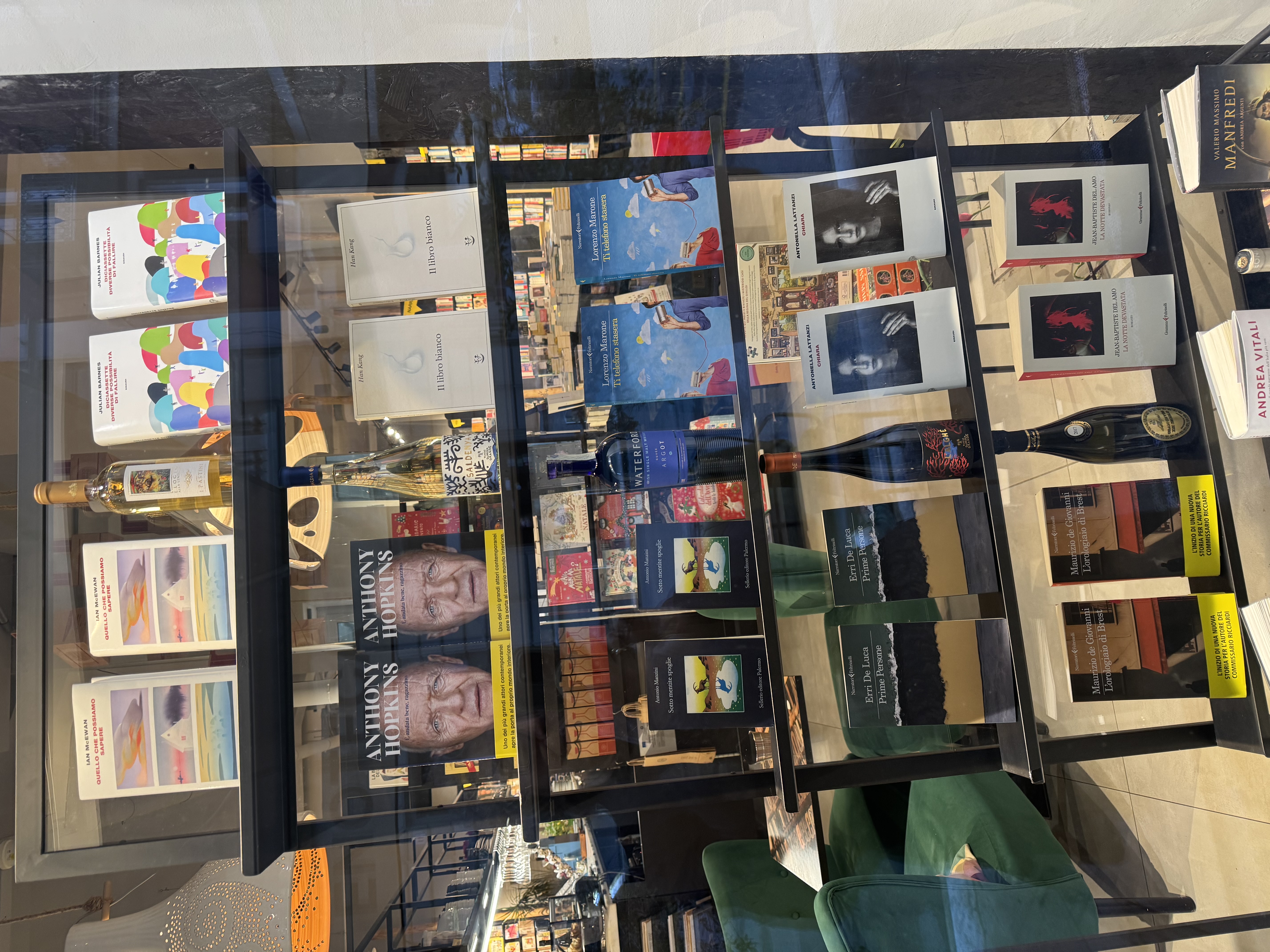
Let me start by acknowledging not only that this post is very belated — because I was travelling in November and the first week of December — but also that I’m feeling anxious and unprepared as I begin writing it. My usual process is to write a few notes about each book in my handwritten Reading Journal, within a month, maximum, of finishing the book. And it was with that practice in mind that I optimistically packed that (slim) journal in my suitcase.
Good thing that it doesn’t take up much room, because in the end I couldn’t have justified its presence: I didn’t even open it until this morning, back home, the rest of my case unpacked! And when I did open it, I was disappointed to see that my entries for books read in October are meagre. Only two are complete; after those two, I’ve written a book title and author’s name on the top of the next four blank pages — you know, to complete at the end of a day hiking in the Peloponnese (insert eyeroll emoji here because AS IF!)
And, of course, we’ve just finished another reading month, and I haven’t even written down the names of the books I read in November. Meanwhile, I have an essay/newsletter I’m itching to write for my Substack account, something memoir-ish that begins in a crêperie we’ve been visiting for years in Paris . . .and winds back to an old French couple I knew in my teen and young adult years. Also, meanwhile, Christmas is coming in its fastest sneakers, and I’m still not over jetlag enough to sleep through the night. Almost, but not quite, and fatigue tends to interfere with my writing ambitions.
What to do, what to do. . .
Just getting on with it is usually the best way, don’t you find? For now, I’m just going to transcribe the two October entries I did complete, and then I’m going to decide how much I can manage of the others. Perhaps just title and author and a link or two. . . We’ll see
First, this little reminder
As usual, the numbering in this post comes from my annual handwritten reading journal, and the italicized text below is directly transcribed from that journal’s pages (once upon a time, I simply included photographs of those pages, but too many of you found my handwriting tough to decipher, especially in the photographed format). Notes to myself, that is, so that I can remember a book and remember my response to it, rather than any attempt at a more polished, edited review.
I’ve used regular font for any additions to my journal notes and included references to any posts from my Instagram Reading account.
62. How To Solve Your Own Murder. Kristen Perrin. Mystery; Amateur detective; Female detective; English village/Great House” mystery; Annie Adams series.
Three young women — teenagers, really — visit a fortune-teller . . . and Frances is told she will be murdered one day. Her friends try to convince her to laugh off the prediction, but, in fact, she devotes the rest of her life to suspicion, to avoiding an early demise.
And then decades later, she summons her great-niece to her grand estate, but the morning of their scheduled first meeting Annie arrives to find her Great-Aunt dead . . . and Annie’s determined to find the cause and, if necessary, the killer. She’s drawing not only on her own nascent mystery-writing skills, but also on copious records, diaries, clues left behind.
This is a fun new entry into the “quaint English village” mystery with a charming young female protagonist (and a possible love interest). I put the next in the series on hold at our library as soon as I finished this one. And the day after I arrived home, I was notified that I’m finally at the top of the list — picking it up later this week.
63. La Carte Postale. Anne Berest. Literary fiction; auto-fiction; historical fiction; 20th-century European history; 20th-century French history; 20th-century Jewish history; Family History; Holocaust; Read it in French, but widely available in English translation by Tina Kover.
I borrowed this from VPL as an e-book, since expired, so I can’t go back to refresh details. I will keep an eye out for a secondhand copy — there are sections I’d like to reread carefully.
Auto-fiction based on Berest’s own research into her family’s obscured record of those lost to the Holocaust. Begins with an unsigned postcard received by narrator Anne’s mother in 2003: a picture of the Paris opera house on one side, and on the other the names of her mother’s grandparents, aunt, and uncle, all of whom were deported from France to Auschwitz in ’42.
Over a decade later, Berest decides to track down the sender, and she works with her mother to do so, searching through records her mother has kept, listening to her stories, trying to piece together a narrative. They begin back in the early 1900s, when the family was in Russia, then fled to Latvia, then to Palestine, and from there to Paris.
One of the most piercing elements of the narrative is the faith Anna’s grandfather, Ephraim, placed in French society, in his ability to establish himself in the educated bourgeois class — and, certainly, Berest and her sister, her mother, are well ensconced there now. And yet, as she retells the family’s story, goes on road trips with her mother to search for old neighbours, finds her grandparents’ house, she must confront the anti-Semitism she has experienced personally (and, seemingly, internalized to a degree). As her daughter tells first her grandmother, and then her mother, a schoolmate has told the young student that her family doesn’t like Jews. And Anne is assailed by memories of similar incidents she’s always contextualized as insignificant, given her secular identity, Jewish only nominally.
Difficult to read, and also compelling. . . the Gaza bombardments were a few years in the future as this was published . . .
Okay, so that’s as far as I got with writing notes for October books. I think what I’m going to do next is list the other books and add a few lines for each, bypassing my Reading Journal for now, and promising myself I’ll transcribe whatever I type here back into handwritten notes on those blank notebook pages later.
64. Secret Scripture. Sebastian Barry. Literary fiction; Historical fiction; contemporary Irish literature; 20th-century Irish history; psychological fiction.
I read this for an Irish book club, although by the time I read it, I realized I’d be away for the discussion. Wish I could have participated in that, but I have no regrets about reading the book anyway. In it, we move back and forth between the journals of Roseanne, a woman in her 90s who has been incarcerated for decades in a mental hospital, and her psychiatrist, Dr. William Greene, who is assessing her for readiness for discharge. As we read, a huge gap emerges between the narrative Roseanne is secretly writing and the official account of her life, her supposed crimes (and those of her father), and her mental health — an official record heavily influenced by the Church’s power and the warring politics (religion; colonialism) of 20th-century Ireland.
Fortunately, Dr. Greene is curious enough about his patient that he takes his research further than anyone has in the past; the compelling and poignant truths he unearths coalesce, by the end, into an astonishing discovery (some will find it a plot twist too far, and I can’t quite disagree, and yet . . .).
I loved this book (and strengthened my knowledge of Irish history/politics through it) and will go back to read the other two books of the McNulty Family trilogy (each of the three McNulty brothers had a relationship of some sort with Roseanne).
65. Blood and Bone. Valentina Giambanco. Mystery/Crime. Police Procedural; Alice Madison series; Seattle setting.
Sadly, with this book — the third in the series –, I’ve read all there seems to be written about Alice Madison. Paul and I started with the fourth book, after which I read the first (wrote about it here), and second. I recommend any/all of them, but I suspect they might be tough to find now. Let me know if you come across a copy.
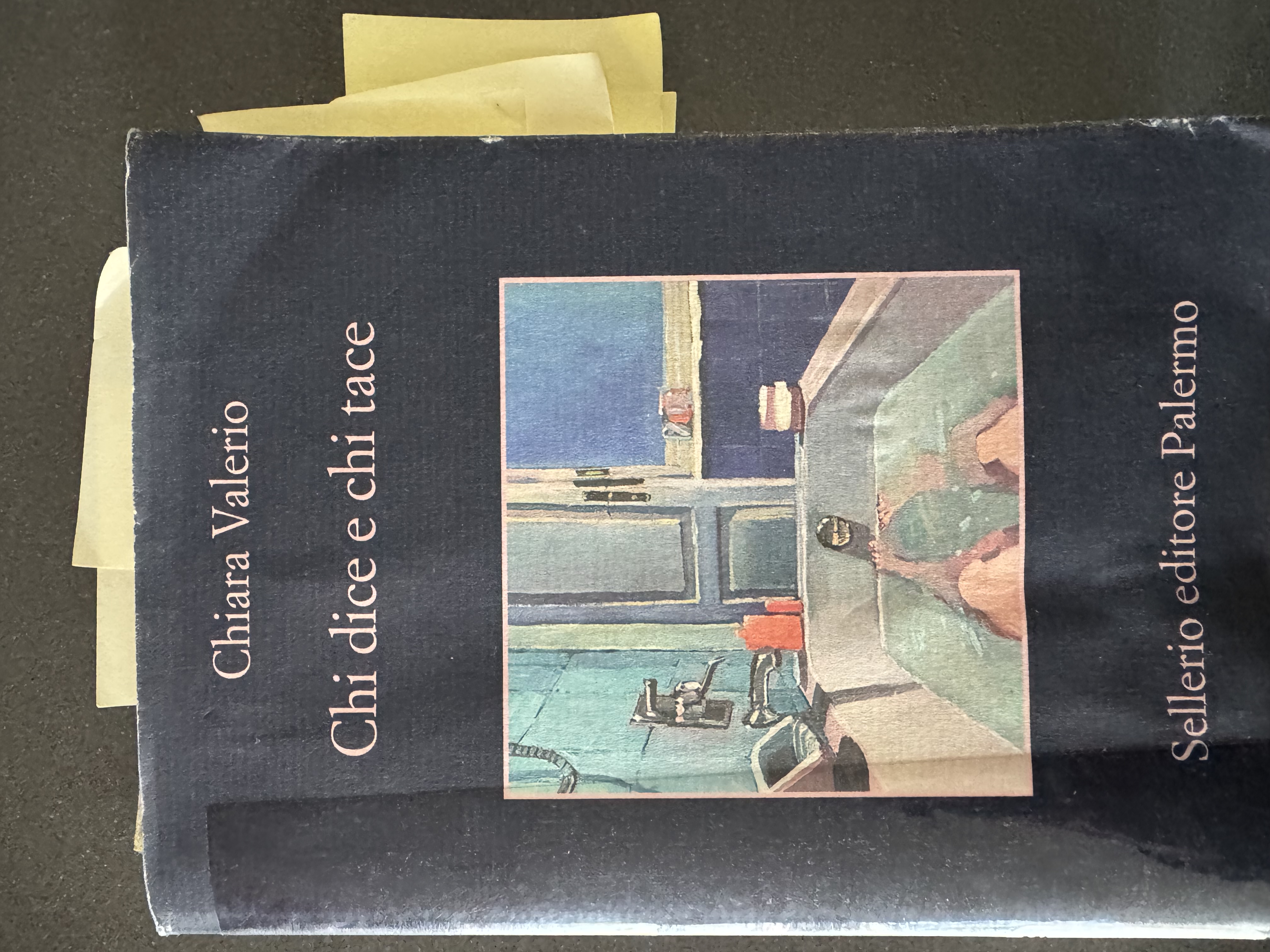
66.Chi dice e chi tace. Chiara Valerio. Literary fiction; psychological fiction; giallo/mystery novel; Setting: Small coastal town in province of Lazio, Italy; English translation (by Ailsa Wood) available, titled The Little I Knew.
I read this one for the book club at the Italian cultural centre here in Vancouver; this year we’re reading prize-winning (or nominated, shortlisted) books by female writers (scrittrici). Chi dice e chi tace uses the form of un giallo (a mystery novel), but Valerio stretches the genre’s possibilities. . . in ways, honestly, that many of the other readers in our book club found irritating or hard-to-follow or simply tiresome. I was one of the few exceptions and undoubtedly its biggest supporter.
In the novel, Lea, a lawyer married to a teacher, Luigi, with whom she has two daughters, has always lived in the small seaside town (the depiction of the town and its community is clever, observant, and entertaining) at the end of Lazio’s coast. She has a deep appreciation for the closeness she experiences here, but she also finds it stultifying at times, confining. And her friend, Vittoria, an older woman who arrived in Scauri (with a much younger woman) as a compelling enigma years ago, offered a vision of possibilities, a sense of values beyond the town’s smaller framework.
So when Vittoria, who swam regularly in the sea, fearlessly and joyfully, is found dead in her bathtub, apparently from drowning, Lea begins asking questions. But the questions she asks about Vittoria’s past and the answers she gets push her to think about her own life, about the choices she’s made, about what she likes and why. She finds herself questioning her desires as she explores Vittoria’s past, intrigued by the way the older woman seems to have breached all the conventions Lea accepted.
Here’s a short summary of the book, in English, in case you’d like to find out more. Those of you who read Italian will easily find a number of reviews — here’s one, for example.
67. The Book of Records. Madeleine Thien. Literary fiction; historical fiction; speculative fiction; philosophy; biography (philosophers Baruch Spinoza and Hannah Arendt; Chinese poet Du Fu).
This was not a book to read as an ebook, which I didn’t realize it until I’d bought it (several months ago). Finally began reading it in early October, so I was juggling it with my Italian book and reading it after La Carte Postale (borrowed from the library, also in e-format). Not the best conditions to get the most out of a beautiful, dense, brilliantly imaginative novel speculating on the “perforations” of history such that the past pierces the present in surprising and unpredicatble ways.
The novel is set in a near-future, a liminal-apocalyptic time-space called “the Sea,” where a group of characters form a small community, a conditional connection, a provisional stability, in an ever-changing flux of international migrants seeking to get elsewhere. The connection is made through readings of, and discussions about, three books rescued from the character’s past lives, books from a series about “great voyagers”: the three “voyagers” whose biographies centre this connection are philosopher Baruch Spinoza, philosopher-writer Hannah Arendt, and poet Du Fu.
Are you already beginning to see why this is a book to own in physical format? To underline, highlight, tag . . . and above all, to sit and think, to page back and connect quotations across pages, to savour, to be provoked by. . . .finally, to be awed by Thien’s research, her integration of powerful ideas, the way she pulls these ideas and insights and historical facts into a narrative in which we can also feel. In which we are moved by and recognize (aspects, at least) of the characters. . . and in which we must reluctantly see how provisional is our own security, given the current geo-political and environmental realities and the repetitive historical realities represented by Spinoza, Arendt, and Du Fu. The perforations. . .
If my barely cohesive account intrigues you at all, you’ll find a much stronger reading of it in Xan Brooks’ review in The Guardian — He calls it “a dazzling fable of migration,” and “a rich and beautiful novel” before going on to say “It’s serious but playful; a study of limbo and stasis that nonetheless speaks of great movement and change. If this turbulent, mercurial tale has an anchor, it is its belief that ‘in order to extend life and preserve civilisation, we are obliged to rescue one another’.”
And that concludes my October Reading post, a month later than usual, so that now I can take a breath or two before starting on my November post, which would normally be published here by the 15th. That’s likely to be late as well, since I’m determined to do some December reading (several library holds were waiting for me as soon as I got home).
But now it’s your turn. Busy as you likely are with December/end-of-the year festivities, I hope you’ll find a minute to join our book conversation. Comments or queries about the books I’ve mentioned here; recommendations (or the opposite) about books you’ve read lately. It’s all grist for the bookchat mill. . . The mic’s all yours!
xo,
f

I always enjoy your book recommendations. I have one for you, The Correspondent, by Virginia Evans. Written in a very unusual format it unexpectedly draws you in. Worth your time, I think.
I LOVED The Correspondent!! …and have recommended to several friends
Author
Me too!
Author
Thanks for this, Susan! I read The Correspondent last week and have already recommended it to a couple of friends! I’ll be writing about it in my December Reading post, which is unlikely to appear before mid-January. Your mention of it gives readers a nudge to put it on their Christmas list or get on the list for it at their local library.
Actually, I have to stop buying books (or borrow them ). So,I’ve bought How To Solve Your Own Murder. And Blood and Bone is waiting in my library already. And than had to stop. it wasn’t easy
Such a wonderful,wonderful trip you’ve had and read so many books !
Following Sue’s recommendation,I went down the rabbit hole with Simon Mason and both of his series ( I’ve read in October :
from DI Wilkins series: Lost And Never Found and A Voice in the Night, and in Finder series,Missing Person: Alice ) both series are so good,in their own way
Jimmy Perez is back ( and I’m so glad!)in Ann Cleeves’ The Killing Stones (living in Orkney at the moment,with his partner Willow Reeves and their growing family)
Anne Lamott’s A Journal of My Son’s First Son (I usually try to check on your blog if you were writing about books I comment-didn’t find this one)-it was my first Lamott’s book,she is hilariously honest,in her own words:”Actually,I’m borderline” !
It would be better to start with her Operating Instructions, in chronological order,there were so many people in her life and book to know exactly who’s who
So,I haven’t read Operating Instructions yet but I’ve read The Baby Owner’s Manual by Joe and Louis Borgenicht ,as well as The Montessori Baby by Simone Davies and Junnifa Uzodike . I utterly liked both books,very different but similar in a way. The first is funny,both are sweet and useful
Dottoressa
Author
This book addiction is pretty powerful, isn’t it? I have a stack I’m working my way through (some have been in the stack for a few months!) and yet I reminded Paul yesterday that we have to make our annual Christmas trip to a favourite bookshop (where we each pick out the books we want the other to give us). So my stack will be even higher next week. . . And, as you well know, that’s partly your fault 🤣
And now you’ve got a whole new genre to read — the Grandparenting books! I’m curious, now, to see what else you find (and I’m mentally looking over what I might have read since becoming Nana 17 years ago. Not too many, I don’t think. You’ll have to catch us all up).
I found your account of The Book of Records so I intriguing that I’ve borrowed it, from one of my local libraries. Here’s hoping I’m able to spend more time reading in the coming weeks than I’ve recently been able to do.
I’m currently reading an autobiography by Julie Goodwin, the winner of Australia’s first Masterchef competition. Interestingly, Julie is also a survivor of childhood sexual abuse, and a recovering alcoholic. Her writing is honest and well-observed. Although I’m not far into the book, I’m engaged and curious to learn more about Julie’s challenges and choices.
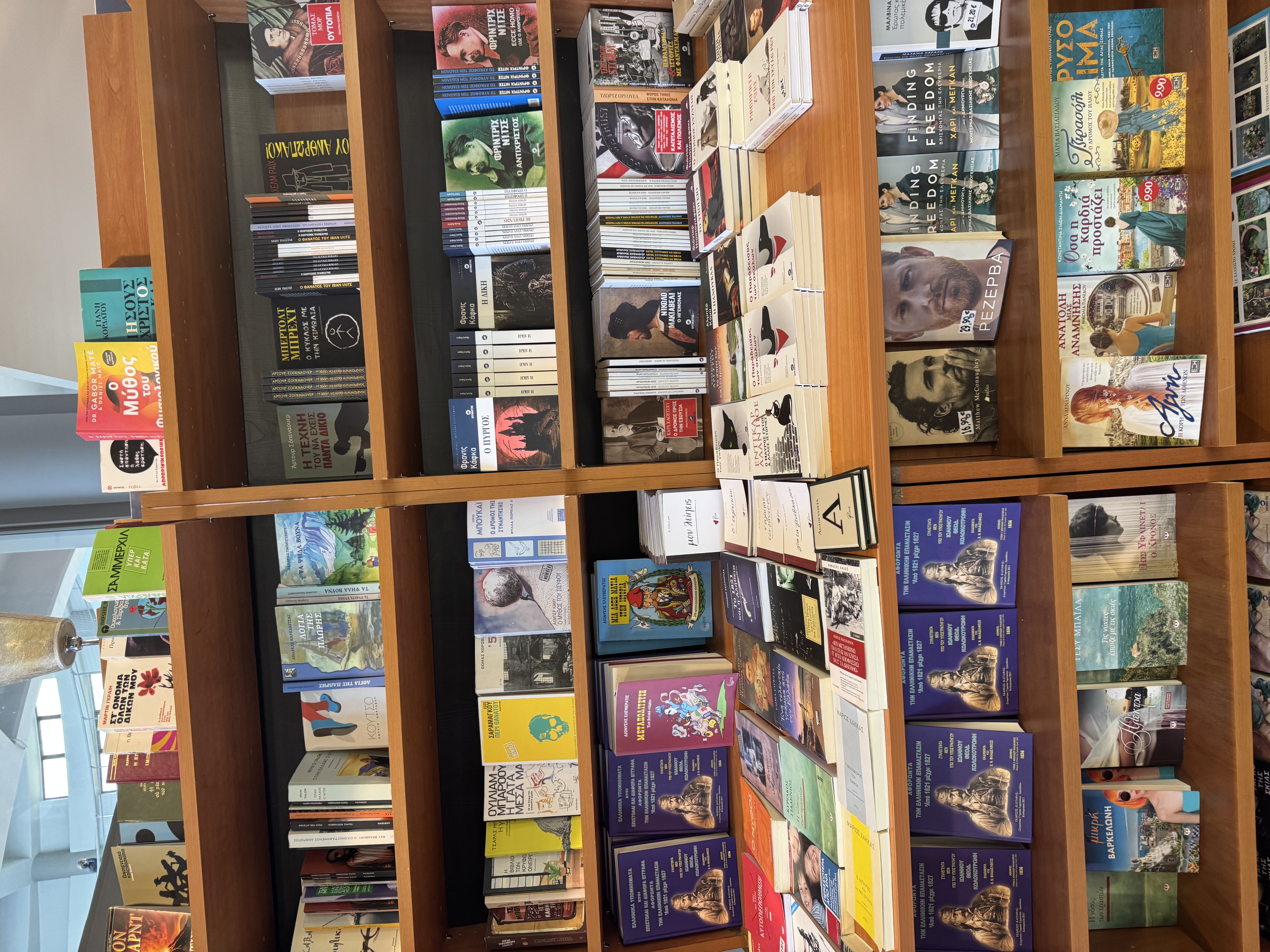
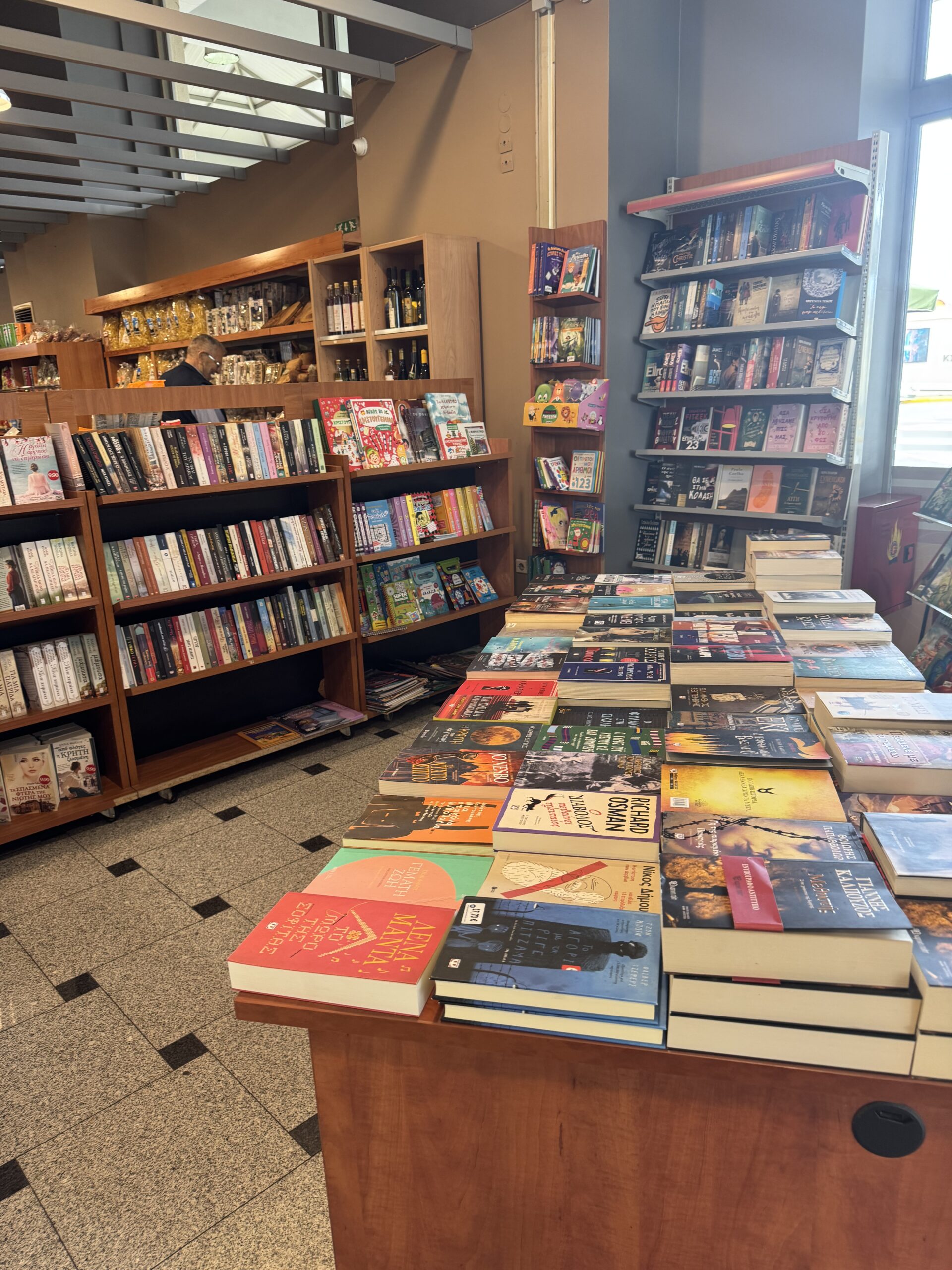
Your photos of the bus station book offerings are fascinating. I encountered few bookshops during my two visits to Greece (during 5 months of travel through Europe in the 70s) and was struck by the volume and range on offer.
Author
I’m keen to learn what you think of it, Maria! It’s so much about ideas that it’s not everyone’s cuppa. In fact, some will want to invoke Readers’ Rules (from that photo I posted in my latest Substack) 2 and 3, while I’m going to take advantage of #4. . .
I’ll look for Julie Goodwin’s autobiography, since we have two family members who trained and worked professionally in kitchens before changing careers.
I was fascinated by that bus station’s selection of books as well — I imagine it indicates a diverse reading population, and also signals a different bus-riding culture than we have here in Canada. We were impressed by the frequent, well-used service (and, of course, a railroad doesn’t work very well in much of Greece’s terrain. . .
I was awake most of the night finishing When We Were Orphans (Ishiguro). I’m reading from the bookshelves in a rental flat. Tonight by I’m starting Atonement.
In the new year I’m going to join a slow read of War and Peace on Substack. I’ve read it several times but it’s a gobbling kind of book for me and I want to slow down and savour it. A chapter a day for a year, roughly. I bought a new (to me) translation so that will be interesting.
Chi dice e chi tace sounds interesting (the actual translation of the Italian title makes me think of something different from the English title) and as an aside I find Sellerio editions very physically pleasing…I love to hold one in my hands.
Author
Oooh, that’s a well-furnished flat you’re renting! (Should be a category for renters/travellers like us on all the Air BnB / apartment rental sites — and photos of the rented bookshops. . . The one I rented in Paris this past spring had several large bookcases with several hundred gorgeous, large, hardbound, mostly vintage-y/collectible books — and equally large admonitory notes advising that these were not to be touched! Well, okay then!)
I don’t think I’ve read that Ishiguro (it was published in 2000 and I was stuck at reading and writing for my dissertation, most of my own elective reading at the time was escape — mostly mysteries. . . ) I’ll try for a copy at the library. Atonement I did read for a book club. Devastating. I’d consider rereading it now except that stack is so high . . . I admire your commitment to War and Peace. . . and almost intrigued enough to look for that slow read group. . . but then thinking of the stack. . .
Ooh, btw, last week in Paris, I discovered such a good Italian bookstore (Le Tour de Babel) — in case you’re popping through the Chunnel. . .
And yes, I don’t think the English title reflects the meaning of the Italian one, and it definitely directs one’s reading toward the protagonist’s “hermeneutic exploration” (sometimes the 5-dollar words work, imho). . . whereas the original highlights the role of community more. . .
I feel the same way about Sellerio editions — so perfectly designed!
I read La Carte Postale and The Secret Scripture recently. Antisemitism is still with us and the Gaza situation seems to be irresolvable. If only diverse groups could share a homeland peacefully.
I learned a lot from The Secret Scripture and from the discussion at the consulate. I have two Irish great-grandmothers, one who was Armagh Catholic and one who was Antrim Presbyterian. Many of those who lived in the Republic were affected by the Troubles in Northern Ireland.
I’ve got the two other books on hold on Libby.
Author
I wish so much I’d been at that discussion. The facilitator there always does such a good job! So interesting that you have ancestors on both side of that divide. So much sorrow, conflict, damage.
I’ll be interested to see what you think of the other books (especially because you’ll probably get your copies before I do!
Several years ago I was listening to NPR in my car and caught an interview with Sebastian Barry. Apparently he had just won some literary prize. I had not heard of him but loved his Irish accent and what he had to say. I wanted to read something by him and found The Secret Scripture in my local library. I found the book very moving and unlike most of the popular fiction which had been my staple for most of my reading life. A couple of years later my daughter was moderating a panel at a local library, not in the town where I lived but the one next door where I had grown up and lived many years. As I sat in the audience waiting for the presentation a sheet was passed around with all the programs this library offered. Among them was the Global book club which was about to discuss The Secret Scripture. So I showed up the night of the discussion. I found not only books that I might not have chosen which opened my mind but a community of like minded women a few who have become close friends. Their friendship was a lifeline in getting through covid. So I suppose you could say this book was life changing.
Author
this is the best response I could ever have hoped for! Thanks for sharing this story about a life-changing book.